Lil Sprouts 15 months - 2.5 years
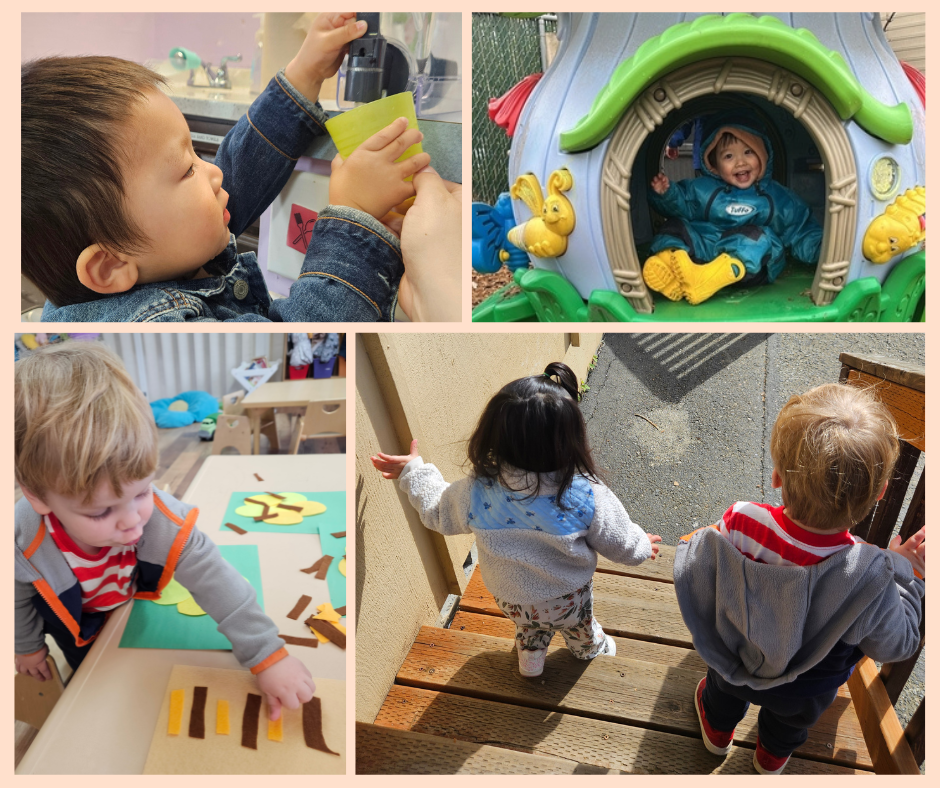
The Lil Sprouts Classroom
Our Lil Sprouts class is dedicated to fostering emerging independence while providing the high-level, individualized care that toddlers require. To ensure every child receives the focused attention they need during this vital communicative stage, we maintain a small group setting with a maximum of ten children per day and a 1:5 teacher-to-child ratio. This intentional environment allows our educators to provide personal guidance necessary as your child learns to find their voice and express their needs.
Fostering Independence & Self-Help Skills
In this classroom, a primary focus is empowering children through the development of self-help skills. Our goal is to ensure that by the time a child transitions to the next classroom, they have gained the confidence and ability to navigate daily routines independently.
Mealtime Responsibility: Learning to use utensils and open-faced cups as well as learning to wash their own hands, clear their own plates, utensils, and cups after eating.
Organization: Managing their own belongings by retrieving items from their cubby for outdoor play and returning them afterward.
Effective Communication: Expressing essential needs, such as hunger, thirst, tiredness, or when they are "all done."
Emotional Regulation: Developing a toolkit of self-soothing techniques to manage big emotions.
Community Contribution: Actively participating in "clean-up time" to care for their shared environment.
Small Group Time
Every day, our students participate in small-group sessions designed to meet them exactly where they are. By splitting into smaller cohorts, our teachers can adapt activities to fit each child's current learning level. Our regular developmental assessments act as a roadmap—if we notice a group is working toward a specific milestone, we tailor our small-group activities to help them master those skills with confidence.
Learning to communicate
Social-emotional growth is a journey, and at this age, big feelings. As toddlers learn to communicate with adults and peers, they may occasionally resort to physical behaviors like hitting, pushing or biting to express a need. Our team proactively manages this phase by:
Redirecting: Guiding children toward positive interactions or a new activity.
Empowering: Giving children the vocabulary (like "stop" or "mine") to replace physical actions.
Tracking: Monitoring patterns to better understand and meet each child's individual needs.
Daily Communication
We utilize the Brightwheel app for seamless updates on your child’s day. Each day, you can expect a digital record of Feedings, Nap Times & Duration, Diapering & Personal Care as well as Photos of your child’s daily discoveries and interactions.